Wednesday, March 14, 2012

'What Can the White Man Say to the Black Woman?' ~ Alice Walker

What is of use in these words I offer in memory of our common mother. And to my daughter.
What can the white man say to the black woman?
For four hundred years he ruled over the black woman’s womb.
Let us be clear. In the barracoons and along the slave shipping coasts of Africa, for more than twenty generations, it was he who dashed our babies brains out against the rocks.
What can the white man say to the black woman?
For four hundred years he determined which black woman’s children would live or die.
Let it be remembered. It was he who placed our children on the auction block in cities all across the eastern half of what is now the United States, and listened to and watched them beg for their mothers’ arms, before being sold to the highest bidder and dragged away.
What can the white man say to the black woman?
We remember that Fannie Lou Hamer, a poor sharecropper on a Mississippi plantation, was one of twenty-one children; and that on plantations across the South black women often had twelve, fifteen, twenty children. Like their enslaved mothers and grandmothers before them, these black women were sacrificed to the profit the white man could make from harnessing their bodies and their children’s bodies to the cotton gin.
What can the white man say to the black woman?
We see him lined up on Saturday nights, century after century, to make the black mother, who must sell her body to feed her children, go down on her knees to him.
Let us take note:
He has not cared for a single one of the dark children in his midst, over hundreds of years.
Where are the children of the Cherokee, my great grandmother’s people?
Gone.
Where are the children of the Blackfoot?
Gone.
Where are the children of the Lakota?
Gone.
Of the Cheyenne?
Of the Chippewa?
Of the Iroquois?
Of the Sioux?
Of the Mandinka?
Of the Ibo?
Of the Ashanti?
Where are the children of the Slave Coast and Wounded Knee?
We do not forget the forced sterilizations and forced starvations on the reservations, here as in South Africa. Nor do we forget the smallpox-infested blankets Indian children were given by the Great White Fathers of the United States government.
What has the white man to say to the black woman?
When we have children you do everything in your power to make them feel unwanted from the moment they are born. You send them to fight and kill other dark mothers’ children around the world. You shove them onto public highways in the path of oncoming cars. You shove their heads through plate glass windows. You string them up and you string them out.
What has the white man to say to the black woman?
From the beginning, you have treated all dark children with absolute hatred.
Thirty million African children died on the way to the Americas, where nothing awaited them but endless toil and the crack of a bullwhip. They died of a lack of food, of lack of movement in the holds of ships. Of lack of friends and relatives. They died of depression, bewilderment and fear.
What has the white man to say to the black woman?
Let us look around us: Let us look at the world the white man has made for the black woman and her children.
It is a world in which the black woman is still forced to provide cheap labor, in the form of children, for the factories and on the assembly lines of the white man.
It is a world into which the white man dumps every foul, person-annulling drug he smuggles into creation.
It is a world where many of our babies die at birth, or later of malnutrition, and where many more grow up to live lives of such misery they are forced to choose death by their own hands.
What has the white man to say to the black woman, and to all women and children everywhere?
Let us consider the depletion of the ozone; let us consider homelessness and the nuclear peril; let us consider the destruction of the rain forests_in the name of the almighty hamburger. Let us consider the poisoned apples and the poisoned water and the poisoned air and the poisoned earth.
And that all of our children, because of the white man’s assault on the planet, have a possibility of death by cancer in their almost immediate future.
What has the white, male lawgiver to say to any of us? To those of us who love life too much to willingly bring more children into a world saturated with death?
Abortion, for many women, is more than an experience of suffering beyond anything most men will ever know; it is an act of mercy, and an act of self-defense.
To make abortion illegal again is to sentence millions of women and children to miserable lives and even more miserable deaths.
Given his history, in relation to us, I think the white man should be ashamed to attempt to speak for the unborn children of the black woman. To force us to have children for him to ridicule, drug and turn into killers and homeless wanderers is a testament to his hypocrisy.
What can the white man say to the black woman?
Only one thing that the black woman might hear.
Yes, indeed, the white man can say, Your children have the right to life. Therefore I will call back from the dead those 30 million who were tossed overboard during the centuries of the slave trade. And the other millions who died in my cotton fields and hanging from trees.
I will recall all those who died of broken hearts and broken spirits, under the insult of segregation.
I will raise up all the mothers who died exhausted after birthing twenty-one children to work sunup to sundown on my plantation. I will restore to full health all those who perished for lack of food, shelter, sunlight, and love; and from my inability to see them as human beings.
But I will go even further:
I will tell you, black woman, that I wish to be forgiven the sins I commit daily against you and your children. For I know that until I treat your chil dren with love, I can never be trusted by my own. Nor can I respect myself.
And I will free your children from insultingly high infant mortality rates, short life spans, horrible housing, lack of food, rampant ill health. I will liberate them from the ghetto. I will open wide the doors of all the schools and hospitals and businesses of society to your children. I will look at your children and see not a threat but a joy.
I will remove myself as an obstacle in the path that your children, against all odds, are making toward the light. I will not assassinate them for dreaming dreams and offering new visions of how to live. I will cease trying to lead your children, for I can see I have never understood where I was going. I will agree to sit quietly for a century or so, and meditate on this.
This is what the white man can say to the black woman.
We are listening.

Sunday, March 4, 2012

what does it mean to be RADICAL?


i was watching a lecture from Melissa Harris-Perry she gave at a university about her book, Sister Citizen, where she talked candidly about the plight of Black women and what it feels like to be in our position in this society (if not all universal political spheres). i agree with everything she had to say, and i have a lot of respect for her.

recently, Harris-Perry snagged a spot for a new show on MSNBC where she talks politics and other social issues with a Black Feminist edge. doing a little research on her, i see that her first book, which received little to no recognition was followed-up with Sister Citizen : Shame, Stereotypes, and Black Women in America in September of 2011. prior to that, and currently, she is a professor of Political Studies and African American Studies.

my question is : how is it that Harris-Perry has been able to rocket to the top of the media, become a political analyst, and be rewarded with a show of her own on a major news network so quickly? not only that, but she doesn't seem to be saying anything other Black Feminists haven't said prior to her. she has not produced any shocking statistics or studies or theories on the struggle of Black womanhood in this country, yet MSNBC is asking her to tweet her opinions on The Help?

this is not a criticism of her. the fact that a Black woman is actually speaking to our realities is radical, in and of itself. her metaphor about 'The Crooked Room' (in the first link above 12:50 in) is so on point and true. however, these are not things i have not read somewhere in the pages of a bell hooks or Toni Cade Bambara piece. she is radical, in that she speaks. for a Black woman, in a post-colonial (arguably) society, that alone is radical.
however, i personally have a narrower idea of what radical is. radical, to me, is scaring white people. it seems to be very easy, and for some whites, it is. but to scare even the liberal white people who date Black people, love Roscoe's Chicken & Waffles and listen to Wu-Tang and Outkast is a feat upon itself.

take the slight dichotomies of the past and present. W.E.B. DuBois experienced so much animosity that he retreated to Ghana. whereas, Booker T. Washington was sharing crumpets and tea with Alabama political figures who probably lynched and castrated Black men on Saturday afternoons. although he was assassinated, white people LOVE Martin Luther King Jr. so much so that they even have a holiday reserved in his honor. Malcolm X, on the other hand is still regarded as a militant, violent, racist who hated white people. even on a global scale, in Africa, many who posed a geniune threat to the white supremacist platform, have been assassinated : Nkrumah, Lumumba, Sankara and The Mau Mau. Obama-not a threat. Louis Farrakhan-a threat. Henry Louis Gates J.r-not a threat. Assata Shakur-a threat. bell hooks-a threat. the education of Black youths-a threat. an African American/African connection-a threat. solidarity amongst all people of color-a threat. John Africa-a threat. Michael Steele and Herman Cain-about as much a threat as Taylor Swift.
those who talk about whiteness, white supremacy, and colonialism and even suggest resistance and/or self-defense are the real threats to white people. and off that, it is clear to see why Harris-Perry received a show so quickly from MSBNC - because she isn't a real threat.

from now on, i'll be looking for the people that scare white people. white people love Obama just as they all love tokens that pose no threat to them. i can't wait for the person to run for president, write a book, become a professor who's dodging bullets and has to hire Suge Knight as a bodyguard. maybe we shouldn't wait for someone to do be that, and should just be them ourselves.

and i think, most importantly, we have to be aware of these things and learn to question and criticize those people that are picked to be our representatives by white people. we have to ask ourselves, whenever someone Black wins a political position, gets a television show, or gets national recognition for something, what have they sacrificed or diluted or stay silent on and why are white people okay with them?

with all that said, i have yet to read her book. i plan on doing it soon and maybe writing a review about it. if anyone has read her book and would like to give some insight, feel free.

"He got the peace prize, we got the problem. ... If I'm following a general, and he's leading me into a battle, and the enemy tends to give him rewards, or awards, I get suspicious of him. Especially if he gets a peace award before the war is over." - Malcolm X on Dr. Martin Luther King after he received the Nobel Peace Prize

comment. think. criticize.

Wednesday, January 18, 2012

The Diaspora in Europe

the other part of the African diaspora i spoke the least about in my previous post about Africans and African Diasporans was the diasporic community in Europe. the DynamicAfrica blog put up a number of videos on African Immigrants living in Europe which gave much insight to their lives. however, they are immigrants and don't necessarily have the same experience as those that were born from 2nd and 3rd generations in Europe. here's one of the Surprising Europe series:


i cannot say i know of many blogs or website from the diaspora in Europe, so feel free to share.

on another note, watching these series reiterated the desperate need for Black people in the diaspora, those on the continent, and those immigrating from the continent to other, especially Western nations. the transition of Africans in Europe would be so much easier if they had possibly a Black organization on their areas helping them and getting them situated. legal advice, knowledge of health clinics or doctors/physicians that do work on the side, or housing with other Black/African roommates is not something impossible. we just need the solidarity first.

comment. think. criticize.

The Diaspora in Latin America

a post or two ago, i was discussing the rift between Africans and African Americans, and i went into detail about the diaspora. the portion about the diaspora was lacking much on non-USian people from the diaspora. i've become more informed about various situations of Blacks not only in the West Indies, South America, and Canada, but also in Europe. and really, there's Black everywhere with small communities in Asia and Australia as well. if anyone has any resources on those from the diaspora in Australia, the Middle East, Indonesia or Asia, feel free to share.

this post i wanted to talk about Latin America and those that are put in the "Latin" category. this video discusses the complexity of the term "Latino/a" and the racial ambiguity that exists in the term:

the categories in the US often times force people to choose between one or the other, when oftentimes they embody both simultaneously. "Black" and "Latino/a" is often referred to as "Afro-Latino/a", "Black Hispanic", or just "Spanish" in New York City. the political correctness of each of these terms is not to be determined by me, but some find the term "Hispanic" or "Spanish" offensive, while others see no problem with it.

many people from Central an South America embrace the African part of their culture and/or themselves, but just like any colonized people, it is devalued collectively. South America, in particular places such as Brazil have more Blacks than any country outside Africa, yet most media representations of Brazilians look like this. systemic racism and issues with self-hatred plague Afro-Latino communities just as they do all others. during the slave trade, more Africans went to South and Central America than the United States, but you would not know it looking at their media.
here are some blogs, websites, and videos about Afro-Latino/as:

comment. think. criticize. add & share

should white teachers be allowed to teach histories about people of color?

so, i took 20th Century Black History this semester as a way to get credits for my African American Studies minor. and i'm getting annoyed by a few things...

for one, my professor is white. i'm not going to say i wasn't disappointed the first day of class to see someone that looks like Stone Cold Steve Austin (minus the muscles) setting up his slideshow.
firstly, i don't think any college should prohibit someone from achieving a degree or teaching position in African American studies if they're white. i do, however, think there should be extra requirements for them to get a degree in the field and that colleges should encourage or try much harder to employ Black professors for Black Studies as much as they possibly can. there are a number of Black with degrees in Black Studies that cannot find jobs. he cannot and will never be able to speak about Black history from the perspective that we can. and that is what is most needed. equally, i don't want a white man or woman teaching me about Taoism, Asian Studies, Arabic, Spanish, or Latin American Studies. the diversity of schools is lacking and the perspective is one of an outsider. i want someone whose first language was Arabic or Spanish to teach me those languages and i want an Asian teaching me Chinese, Taoism or Asian Philosophies. not a white man who went to China for 3 years and now thinks he can teach me about Asia or the Spanish language.
does he (or they) know more about Black history than most Black folks? more and likely. does he know more about Black history than a Black person with a degree in African-American studies? absolutely not. and he never will.

and he said the n-word today. twice. he was reading something that said it and he recalled a quote from some racist politician, but still.

also, i really enjoy, actually i need, a Black professor. at least one a semester. i have another one (Geography of Africa course...of which the professor and i are the only Black folks in the class...), but i need more, and i need them talking about the things that are important to our community.

comment. think. criticize.

Tuesday, January 10, 2012

Thursday, January 5, 2012

why i'm not voting...

i've decided i'm not voting this time around, or possibly ever. here's why:

1)Politics is a distraction
i think this is almost analogous to the issue of tokenism. tokenism (also known as integration in the US) is something that was done to get our minds away from the highly racialized (amongst others) hierarchy that exists in this country. if they appease us on some small, cosmetic level, we will cease to think about all the issues and the depth of the issues.
similarly, politics is done for the purpose of getting our minds off the perpetual problems our society and others like it produce, encourage, and maintain. for example, the idea of democracy is one that does not exist in this country. we have raided and raped other nations under the guise of delivering democracy to their doorsteps. yet, we have the Electoral College that can override the majority rule with whomever they wish. not to mention the absurd obstacles presidential candidates have to overcome in order to even have their name placed on the ballot. monetary fees, petitions, media coverage, and other limitations make it so this can never fully be a democracy. not to mention the way in which the media (more and likely backed by the government) spotlights two main candidates making it so that we always have to choose between a democrat and a republican. how is this democracy if i only have two choices and someone chooses them for me?
everyone in this country feels or has felt as though they were choosing the lesser of two evils and i'm over that. it is a waste of time and a distraction, at best. there are millions of dollars spent every four years, and the years leading up to these presidential races, for what? us to get someone whose going to do what the last shitty president did before him?
democrat or republican, they've all come from the same steaming pile of corruption.

as opposed to this country spending millions of dollars, time, and energy to understanding and expelling racism, sexism, LGBTQ issues, classism, the problems with our modes of subsistence, and food production...we're spending time of cosmetic issues such as how many democrats are in the house or if the republicans will put up a strong candidate against Obama. it is a distraction and nothing more.

2) Democrat=Republican=Independent=Libertarian
none of these parties are particularly different. they all have the same core values and you can rest assured that no one they put into presidency will truly have any power to change anything. four or five laws and a removal of troops from some country we should have never been in means nothing when we have thousands of issues and a system doomed from the get go.
last election, i was rooting for Dennis Kucinich (although i voted for Obama). he had a number of positions i still respect even now. however, i know that even he cannot impact the system that much because he is not genuinely in control. he is a token, again, to keep your mind off those behind him who certainly hold much more power than he ever could.

3) I'm over this 'Vote or Die' shit.
i can complain and will complain about the system until it changes. this remark i've heard too many times against those that choose not to vote - "you can't criticize the president if you don't vote" - is hogwash. being a citizen of this country, (or even of the world, considering the monetary power and position the US holds on a global level) and being effected by the decisions made by this country legitimates my opinion. as a citizen of the world, we all have a say in the American government. when the US bombs Libya and Yemen without regard, without a "demoratic" vote, without any consideration for borders and a nation's sovereignty, we all have to criticize the government whether or not we pay taxes, and whether or not we have voted.

4) so that when Black folks that love Obama tell me "that's a vote for Obama lost! why aren't you voting?" i can give them all the reasons i'm not voting for him and why his color has shown to be more of a crutch than a place of solidarity.

5)because i'm focusing on social issues.
dealing with and changing social issues are what will truly change this country and our system. once that is in place, the whole concept of "politics" and "politicians" will be arbitrary.

6) because i know the two evils this race will produce will be far from my ideals.
Obama is the democratic candidate. and i've made it clear that i've lost all political respect for him. and the Republican candidate looks as though it will be either Ron Paul, Mitt Romney, or Newt Gingrich. White Man 1, White Man 2, and White Man 3. they're all the same.
Newt has recently said he'd like the talk to the NAACP to help discuss ways to get Black folks off food stamps. Rick Santorum, another republican candidate, recently said he doesn't want to give Black people other people's money (welfare). so between Token Obama and a couple of white racist cunts who think every person on welfare is Black, what point is there in voting?
there isn't one.

comment. criticize. think.

Wednesday, January 4, 2012

The Rift between Africans and the diaspora

not too long ago this post came across my dash on tumblr. you can read my response at the very bottom, so i won't repeat it. i mainly wanted to talk about the rift that exists and hopefully some solutions to building bridges and make amends.

i've spoken about this before in another post, and every time it gets brought up, i can feel hostility and pain on both sides. it is such a touchy subject that i have to remove myself from it at times because too many emotions arise from just speaking about my reality and my personal identity.

but it's become more and more evident to me that if we are to survive in this world, there has to be unity between us. ultimately, amongst all people of color, but we have to start in our own communities. i don't think it was a coincidence that the American revolutionaries that reached out to Africa or other diasporic communities have been swiftly assassinated, jailed, or considered the most dangerous by their respective governments. Assata Shakur, Malcolm X, Louis Farrakhan, Marcus Garvey, etc. when detrimental links are shown between American (US) consumers and government, it is almost always silenced in some fashion because unity between us would mean unfathomable change on every level.
once we become unified and our struggles intertwined, there will be no mission that is unachievable.
so here are some ideas i've gathered from reading the views from those born on the continent and those that weren't that i think will aid in the bridge for both sides:

For Africans from the Diaspora:
Learn: it is a wonder just how little i knew about Africa last year, and the year before that, and before i read this one book or got linked with that blog. our system is sustained by our ignorance, so why would our public education have more than 2 pages on the entire continent of Africa?
go to the travel section and pick up books about Africa to get a basic feel (although, note, most of these books are written by white people who have their own experience in Africa that may or may not be based on their status as tourists/voluntourists).
the internet IS YOUR FRIEND. there is no excuse to not know about Africa, people from the continent, and various cultures within it. i have learned an immense amount of information from friends i've linked with through the internet, African blogs i've followed, and people i've met in person that have been very helpful. here are some blogs and websites about and from people from Africa:
Mingle: find out about African clubs, restaurants, organizations, and stores in your area. shop there, chit chat there, become facebook friends, etc.

Read: get some books and read your ass off. there are a number of fiction books from authors like Wole Soyinka, Chimamanda Adichie Ngozi, and Chinua Achebe that write about experiences in different African cultures. Chinweizu Ibekwe, Ayaan Hirsi Ali, John S. Mbiti, Cheik Anta Diop, and Ifi Amadiume are non-fiction writers that should be looked into as well. aside from books, read up on the history of different nations and colonialism. read about apartheid in South Africa, the Blood Diamond trade in West and Central Africa. read about respected leaders like Thomas Sankara, Patrice Emery Lumumba, Kwame Nkrumah and leaders that have aided in the destruction of their country like Robert Mugabe and Charles Taylor. and don't forget the revolutionaries such as Leymah Gbowee, Steven Biko, and Queen Nzinga. wikipedia does a great job of having a good amount of info about a country, its population, language, etc. all in one place.

Watch: Ousmane Sembene, one of my favorite filmakers from Senegal, has done a number of films about West African culture. search 'Africa' on netlfix (Lumumba is awesome!), youtube, vimeo, and Google Videos. there are a number of Nollywood flicks on youtube in full. watch them and ask some people you've become acquainted with any questions you may have.

Important to note: everything you read about and hear through the news is not always reality and that you must interact with the people in order to get their reality. no one else can tell their story. it is also imperative that you understand that Africa is a gigantic continent with an immense amount of diversity. what is true for someone in West Africa is not necessarily true for those in the Horn of Africa. even within the same country - Igbo is something separate from Ijaw and Yoruba.
classism and political rifts exist within African communities as well and those with money and political standing do not have the same reality as those without.
also, and most importantly for those trying to reconnect, understand that those living on the continent are not waiting for us to come back so that they can embrace us and have a period of mourning for our destructed history. they have their own lives and may not even know, let alone understand, those of us that wish desperately to return and reconnect. it isn't good or bad, it simply is what it is. this is something we have to understand and move on (something i'm still trying to do...).

For Africans from the Continent:
Learn: from what i've heard, most Africans know a lot about the US and even television shows from the US are aired in a number of African countries. those shows tell about the lives of rich/middle class white America. many African immigrants come to the US with stereotypes about Black Americans birthed from these diluted and edited media outlets.
the US is not a land of milk and honey where we all have money, good education, and equal access to prestige and power. racism, classism, and sexism are thriving in the US at this point and have since its conception. these media outlets and television shows will never show you the dozens of Black males the police have murdered, the Black and Brown women that have been forcibly sterilized or the number of Black people who are working 2+ jobs and still can't pay their bills. and it damn sure won't tell you about our history of lynching, genocide, and the systematic dehumanization of people of color. not just of Blacks in the US but of Native Americans and immigrants of color.
here are some blogs and websites of people from the diaspora that speak about our realities:

Read: there are a ton of books written about Black experiences in the US and other diasporic communities. writers in the US like Cornel West, Michael Eric Dyson, Saidiya Hartman, bell hooks, Angela Davis, and James Baldwin, and Stacey-Ann Chin are just a few. unfortunately, i cannot name any other writers off the top of my head from the Caribbean or South/Central America, so feel free to add to the list or do a simple google search. books that speak about our histories can be found from writers like Marcus Garvey, W.E.B. DuBois, Fredrick Douglass, Sojourner Truth, Langston Hughes, and Zora Neale Hurston. and if these books are not available, google searches with yield just as much information.

Watch: watch films about slavery so you know what they did to us and why we are still recovering. i would suggest staying clear of most news outlets because they tend to focus on and even exaggerate negative aspects of us as a people. there are a number of contemporary films you can watch to see Black life in the US (like Precious), but almost all of these films come along with baggage so it is important to read the criticisms in addition.

Important to note: in turn, as your realities are not the same across the continent, nor is ours. i am from the southern US middle-class background in a small rural military community. this is not the same for someone raised in an urban lower-class (financially) background in Northern US. not everyone is rich in the US, regardless of what they tell you on the news. most of us live in debt up to our eyeballs acquired from college. public education may be better than some places around the globe, but there still exists a hierarchy in which rich white kids have better resources and opportunities than Black and Brown children living in largely colored communities.

i cannot speak of the other diasporic communities, but if you come to the US, understand that you are Black. you will probably get special treatment from whites that like to fetishize you or look at you through a pitying eye ("the poor malnourished, uneducated, savage African that just needs a pair of TOMS shoes and a check from UNICEF..."), but otherwise, you are Black and will be looked at the same way those of us born here are seen. that being, if you're male-a criminal/rapist and is you're female-an emasculating bitch best used as a sex object. all of these can be usurped depending on your level of assimilation, of course. this whole mess about i'm not Black, i'm Somali, i'm Igbo...ain't happening in THIS country. it is true, but once you step in this country, the color of your skin is most important. most people in this country could not tell you whether "Igbo" is a people from West Africa, or a city in Jamaica. and frankly, most don't care. so understand that you may spend ridiculous amounts of energy and time on foolish questions and categories Americans may try to force you into.
also, regarding those that want to reconnect with you, your culture, your country, etc. (note that it is not all of us...not even most...unfortunately) please understand that this is vital to some of us. there is a lot we simply do not know and/or have yet to understand about you or your particular culture. be patient, please. but don't be afraid to set us straight about misunderstandings.

comment. think. criticize. feel free to add to my list if you like.

Mother Tongues

i recently saw an article about languages that are dying around the world. it reminded me of an article i read in my Anthro book. here's an excerpt from my book speaking about the languages of origin for immigrants (or really just non-English languages) in the US or in countries that have a different language.

"If immigrant groups eventually lose their "mother tongues" in many if not most countries, this doesn't mean that the process occurs at the same speed in every group. why is that? why do some immigrant groups lose their language faster than others?

a comparative study by Robert Schrauf discovered the most likely reasons. first, Schrauf assessed the degree to which immigrant groups coming to North America retained their native language over time. the greatest retention was defined as when the third generation (the grandchildren of immigrants) continued to use the native language. Examples were Chicanos, Puerto Ricans, Cubans, and Haitians.
on the other hand, the third generation in some groups as no comprehension of the native language except for isolated words. even the second generation (the children of the immigrants) mostly spoke and understood only English. Examples were Italians, Armenians, and Basques.

Schrauf then measured seven social factors that might explain longer versus shorter retention of the mother tongue. he looked at whether the group lived in tightly knit communities, retained religious rituals from the old country, had separate schools and special festivals, visited their homeland, did not intermarry, or worked with others of their ethnic group."

very interesting. i wonder if those that are in power who are so against second languages, particularly Spanish, know just what it means to sustain a language and what it does to family units to lose that language. if tight knit communities are the medium for maintaining a language, it mot certainly means a break-down in that if that language was to be lost or diluted.

comment. think. criticize.

Friday, November 18, 2011

The Dark End of the Street


so i went to a lecture yesterday about this book that just came out from an Alumni from my school. the book is entitled The Dark End of the Street: Black Women, Rape and Resistance--A New History of the Civil Rights Movement from Rosa Parks to the Rise of Black Power by Danielle L. McGuire.
i found the title of the book very interesting, which is why i went to the lecture. turned out to be a very informative and eye-opening, and maybe if i wasn't broke, i would have bought the book.

during the lecture, and i supposed in the book as well, she details the ways in which Black women had to deal with sexual abuse at the hands of white men. black women were raped, sexually abused and harassed at alarmingly common rates on their way to and from church, the store, and most often, work (which was almost always in a white person's home, on the white side of town). the assailants were mainly police officers and bus drivers and males in the households in which they worked.
and while i found it surprising, there were actually a large number of women that reported these assaults to the police. McGuire found hundreds of police reports that were filed, witness testimonies, and statements from the victims.
this is all well known, or not surprising to most people who know the dynamic historical relationship between Black women and white men in this country. the purpose of the book, however, was to show that the civil rights movement was not a movement started, organized, or funded by Black men.

at some point, after the cases of Gertrude Perkins and Recy Taylor had garnered more outrage from these women that were assaulted on a daily basis, they began organizing against this treatment. they were always helped by men, pastors most notably, but the point being that these every day Black women who started this - they organized pastors to each other, held small boycotts, and eventually financed similar protests by selling baked goods. eventually, this led Rosa Parks (one of the activists who worked early on against the sexual abuse) to become what most of us have heard was the catalyst for the movement.

maybe i'll have more if/when i get her book, but i thought this was a very interesting point which seems to be well backed. but why do we constantly only hear of the civil rights movement through male names? why had i never heard of Dorothy Height until she died? what about Edith Savage and Fannie Lou Hamer? why can we list more names of men apart of the struggle than of women? is this the patriarchy of our system (and/or of the European system) finding its way into our own plight?
on another note, why is this book being written by a white woman? does anyone else feel slightly disappointed when books like these that expose histories forgotten or unknown are researched and written by white people?? how different would this book be had it been written by a Black woman or man? is this even a valid question??

comment. think. criticize.

Monday, November 14, 2011

Vintage Africa

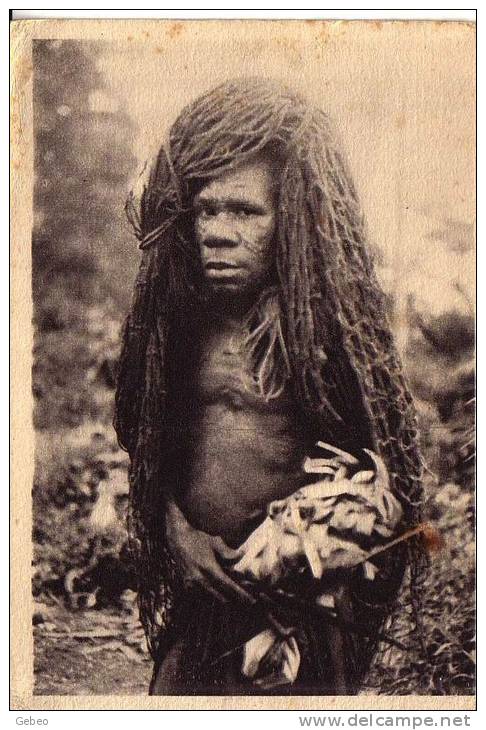
i recently found an amazing website full of colonial era photos of The Congo, Central African Republic and Angola. i found them while searching for one of the photos below i found in a book about ethnomedicine in postcards. they're beyond beautiful. it doesn't specify what people's they're from, but i believe some are of the Banziri.


this photo is the one i was searching for. the book says this about it:

Enema among the Banziri (in what is now the Central African Republic) - Collection L. Martin
Instillation or insufflation of enema liquids into small children is a common type of self-care in sub-Saharan Africa, particularly for young children. modern estimates suggest that at least one million enemas are being used every month is Soweto and that infants in Swaziland may receive as many as 50 enemas a year.

interesting, yea?
if you know of any other websites that feature vintage photos of indigenous people, feel free to share.

Negro History: Lost, Stolen or Strayed


a very interesting documentary about Black History from the era of the 60's.
it is hosted by Bill Cosby with a few clips from early 20th century film that illustrate perfectly the way Blacks were perceived at the time. whats also interesting about this, is that it shows Cosby in way i haven't seen him before. he is angry (justifiably so) with a touch of dark sarcasm.

the only side of Cosby i have seen have been from The Cosby Show and his most recent remarks where he just appears to be an angry old Black man whose top priority is getting young Black boys to pull their pants up. but looking at this film and getting the feelings Cosby was trying to portray, it seems as though the Cosby right now is, just as a number of Black elders who lived during the turbulent times of the 60's are. they are angry that the real revolution never came and that Black youths of today have little knowledge of what they went through and a half-assed interest in even knowing. the bitterness he shows in his media appearances are simply an overwhelming sense of disappointment. he seems to be angry at the youth, but the youth didn't raise themselves. but he has every right to feel as he does.

watch parts 2, 3, 4, and 5 as well.
comment. think. criticize.

Friday, November 11, 2011

Skank Attire?

recently the philosophies and/or intentions regarding the way i, or women in general dress, and exactly what message that may send out to others, mainly in the culture of the US have inspired me to write a post about these feelings. i cannot put my style into any box, however, i will say that mini-skirts and dresses are part of most of my outfits; i own one pair of jeans, and other pants are few and far in between.

while talking to some friends and partaking in a discussion in one of my classes about some comments Muhammad Ali made (at 4:00) about what women should and should not wear, it has come to my attention that the majority of my outfits may be seen as me sending out the message to men that i want to be "bought". the critics use phrases such as "a woman doesn't dress that way unless she's advertising" or "why would a man buy the cow when he can get the milk for free?"
my (and others') outfits are apparently sending this message to men "i want to fuck. i'm a slut. i'm a prostitute. i have no morals. and i have no self-respect" and/or "i want to be bought aka married." the language used to demean other women, based solely on their wardrobe, shows just how little things have changed since the era of the suffragettes.

now, these stereotypes and ideas are not surprising given the religiously saturated society we live in that typically (from Abrahamic religions) believe that women are inherently temptresses that, unless tamed (by clothing and other sexually repressive means/mentalities), will be the doom of the world with our insatiable sex drives. it seems that most that have taken their religion to any serious levels (nuns, other religious women living in communes, etc.) feel the need to be completely covered, barely even showing an ankle. which i think has more to do with being likened more to a man than a woman. but that's another post...

these ideas are the fuel that compel people to ask a rape victim what she was wearing at the time of her rape. these ideas fuel statements that infer every rape/sexual assault/molestation case of a woman is done because she was asking for it and/or wanted it. these ideas are what keep women feeling as though it is OUR responsibilities to KEEP from being raped, as opposed to men just learning to control themselves (it should be said, however, that women and men are victims of rape/molestation by men and women).

women are not a monolith, and different women are portraying different messages. some women actually are sending the message to men that they're ready and able to fuck right then and there. and there isn't anything wrong with that. women have sexual appetites and we shouldn't have to stifle our sexuality because our society has deemed it something unhealthy and corrupt. some women are looking to have men pay their bills in exchange for sex. some are looking for attention and validation from men (and from women as well). and considering this society judges and evaluates women based on our physical appearances, it shouldn't be surprising that women judge themselves on the same standards, that is, on standards set by men.
the point being that, whatever a woman is doing it for, it cannot be assumed that all women are dressing for those same reasons.

personally, i dress however i want to. is it for male attention? i wouldn't say it is. it is more a political statement against the type of restraints this society places on women's bodies; women's sexualities. it is a statement that illustrates body-acceptance and sexual contentment. i think in the struggle towards owning our sexuality, as women, our wardrobe is a very important aspect that should not be slept on. we portray a lot with our attire. i also like the idea that i can possibly change stereotypes of scantily clad women by showing that we don't all have the same agendas. some of us are simply and perfectly content with our bodies and feel no need to cover them. as opposed to me approaching this from the standard of being covered, i'm approaching this from the perspective that we should be/would be naked if it weren't for certain societal standards.
moreover, as a woman of color, i can be dressed in a three piece suit and granny flats, and still be called a "hoe", a "slut" or any other label that seeks to put women down via our sexualities. the supposed lasciviousness of women of color and other sexual fetishes that have been placed on us will be present with or without attire that cover my neck and stop right below the knee.

i'd like some feedback on this.
criticize. comment. think. thoughts.

Thursday, October 27, 2011

thoughts on Occupy Wall Street protests

so here's a synopsis of whats happening with Occupy Wall Street et al. - recently, a bunch of folks have decided to "occupy"/protest certain areas of the country. there are a slew of various cities that have been occupied, such as New York City (Wall Street), Philadelphia, Oakland, Boston, etc. they all have issues with how the system is being ran, being forced to fund wars, being led to believe that a college degree will ensure economic stability when in reality it means nothing when the economy is a mess, accruing thousands of dollars of debt just by simply obtaining a degree, and other issues concerned with corporations and rich people having tax breaks and basically shitting on all non-rich people.

let me just say that all of these issues are legitimate issues to be concerned with enough for a protest/urge to change certain laws. i think it's very backwards the way this society pushes everyone to obtain a college degree, only to learn once you try to obtain it or actually succeed in getting it, that you will more an likely only be able to find a job that only requires a high school diploma or some type of non-academic training. i believe the biggest concerns are those with an unaffordable education and issues with health insurance. all of which have valid oppositions.

with that said, i don't necessarily support the OWS (acronym for Occupy Wall Street which i'll use for the duration to refer to all Occupy movements).

for one, it seems as though the protesters feel as though there is no power in being a consumer. but there is. it seems as though Americans want to be able to buy all they want, from whatever company, and then be able to tell that company they don't support their...wages, or occupation in certain countries, etc. we have to start looking for alternative ways to live in this system (with an aim of breaking it down) and those ways may not be the easiest or the most comfortable. maybe this involves learning to make your own clothes, growing the majority of your own vegetables, opting out of eating meat, buying from thrift stores and second hand consignment shops for some time/permanently (or bartering), opting out of the new video game/ipod/flat-screen tv/Jordans/Louboutins/hybrid automobile/human remy virgin yaki weave/any type of gold or diamond, finding different ways of transportation that don't rely on petroleum, using less electricity in your home, washing clothes by hand, finding other means of entertainment besides television, and the internet. we have buying power, and on a mass scale we can have a large impact. it can be done, we just have to be creative.

second, the rich are not the problem. Wall street is not the problem. predatory lending agencies and vicious student loan corporations are not the problem. Obama is not the problem. Republicans are not the problem. Democrats are not the problem. wars overseas are not the problem.
the ENTIRE SYSTEM is the problem. the design, the implementation, the maintenance, the philosophies that garnered it are ALL the problem. the more i have been learning about other cultures, with an emphasis on pre-colonial indigenous groups, the more i realize just how philosophically bankrupt this system is and always will be.

for example, the Third Genders i spoke of in the previous post are individuals that are ostracized in our society. but, in their own pre-colonial societies, they were accepted. my teacher suggested that this was a way of maintaining the balance; the well-being of the society. this person that may have been born a male but chooses to take on the role of the female is still someone that can contribute to the society; they're still humans; they're still someone's child. how can it be that our ancestors worked maybe 5 or 6 hours a day, yet everyone in the society was clothed, fed, and generally happy? there is no fixing little issues and "working within the system". there needs to be a complete breakdown and rebuilding of the system. a number of us right now are working 40+ hours a week and there's still thousands of homeless or near homeless people in our society and the rest that still need assistance to feed themselves. the issue is the ENTIRE SYSTEM.

third, i believe these protests that seem to be some universal trend, are planned.
how is it that some of the most stable nations in the world are the ones rioting as if they're the worst of the worst? Libya and Egypt, who have just overthrown their governments, with one leader shot dead, are two of the most stable countries in Africa (see charts here). the most unstable countries in the world have no OWS or protest to speak of. i hear about civil wars in Liberia, Sierra Leone, The Congo, Rwanda, and parts of south east Asia, Mexico and Central America yet the US and Egypt are rioting? Mubarak and Qadaffi weren't the best, but they weren't Hussein and Charles Taylor. and BOSTON is protesting? for real? yet black folks in Brownsville BK are no where near protesting their shitty conditions?? and we now have white folks in the US calling themselves refugees. ??? come on...
if anyone in the US has the right to be protesting it's people of color living in ridiculously low-income communities. oh wait, we have been doing that and no one has given a shit about it til 20 something year old hipster white kids started feeling the weight of our mess of a system on their backs. like it has been said at numerous OWS, black and brown folks have been the 99% since the inception of this country. the black male unemployment rate is at least 10% nationwide, and white folks are coming out en masse upset at the system??

this shit is planned. i'm not saying they don't have legitimate issues. i'm saying it's very skeptical that all these protests are occurring at this point in history and all at the same time with no consensus on the purpose or objectives of these movements.

think. comment. criticize.